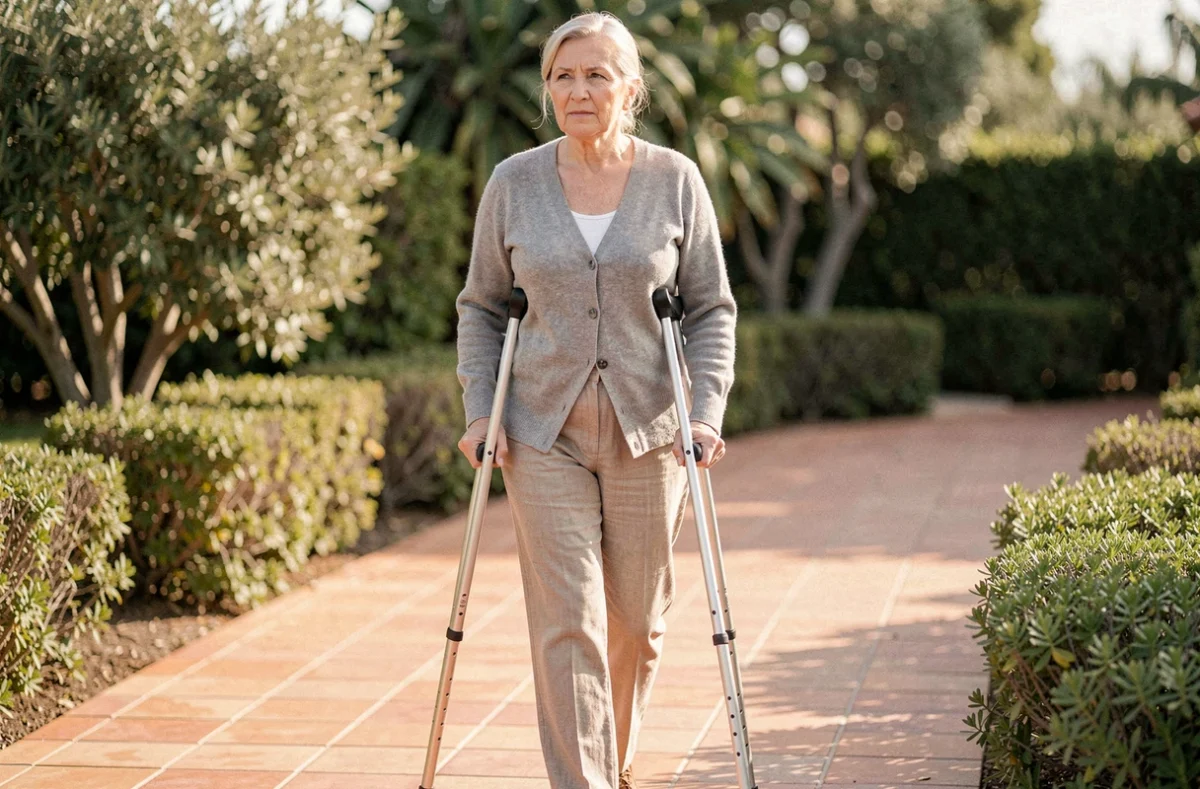
After a sprain, fracture, or knee surgery, the crutch becomes an extension of your arm for several weeks. The problem is that no one is born with the user manual. A poor adjustment or a repeated awkward movement is enough to cause wrist pain, back strains, or even a fall. Here’s how to avoid these pitfalls and regain stable walking from the very first steps.
Understanding Weight-Bearing Instructions Before Placing Your Foot
Have you ever heard your doctor say “non-weight-bearing” or “partial weight-bearing”? These terms radically change the way you will move. “Non-weight-bearing” means that the injured foot does not touch the ground, even to maintain balance.
“Partial weight-bearing” allows for light contact, without transferring your full weight onto it. “Weight-bearing as tolerated” lets you gradually load based on pain. Each instruction applies to all your movements: walking, transfers from bed to chair, stairs, and even the trip to the bathroom.
If you are unsure about the instruction that applies to you, ask your surgeon or physiotherapist for clarification. Loading a operated leg too early can compromise bone healing. Knowing how to use a crutch for walking starts here: precisely following the prescribed weight-bearing level.
Adjusting Crutch Height: The Foundation of Everything
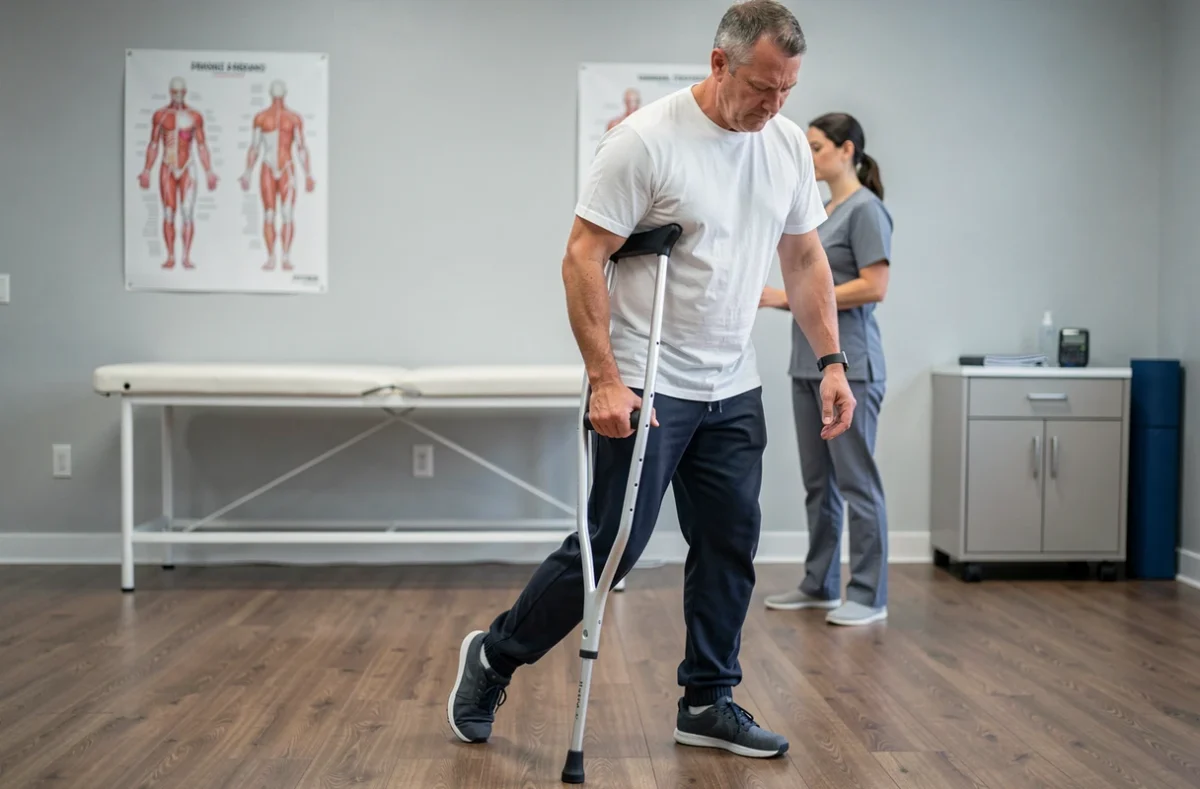
An approximate adjustment turns each step into a source of tension. The correct height is checked while standing, with shoes on, arms at your sides.
Axillary Crutches
The top of the crutch should be about two fingers below the armpit, not against it. The load goes through the hands, never through the armpits. The handle should be positioned at wrist crease height, so the elbow remains slightly bent.
Prolonged pressure under the armpit can compress the nerves of the brachial plexus. Symptoms include tingling, numbness, or weakness in the hand. If these signs appear, have your adjustment checked by a healthcare professional.
Forearm Crutches (Cane-Crutches)
The forearm ring is placed a few centimeters below the elbow. The handle, like for the axillary model, should reach wrist level. An overly straight elbow tires the shoulder; an overly bent elbow overloads the wrist.
Check the adjustment every week: the thickness of your shoes may vary, and swelling in the injured leg can sometimes change your posture.
Safe Walking Technique with Crutches
The basic principle remains the same regardless of the type of crutch: both crutches move forward at the same time as the injured leg, then the healthy leg follows. This pattern limits the risk of lateral imbalance.
- Place the crutches about twenty centimeters in front of you, slightly apart on the sides to widen your support base.
- Transfer your weight onto the handles (not under the armpits) and bring the injured leg between the two crutches, at the level allowed by your weight-bearing instruction.
- Then move the healthy leg in front of the crutches, and start the cycle again.
- Keep your gaze straight ahead, not fixed on your feet: this helps with balance and allows you to anticipate obstacles.
Short and regular steps tire less than ambitious long strides. The temptation to speed up is strong after a few days, but a moderate pace protects your joints and reduces the risk of falling.
Going Up and Down Stairs with Crutches
Stairs concentrate the majority of incidents. The rule to remember is simple: the healthy leg goes up first, the injured leg goes down first.
Going Up
Place the healthy foot on the upper step, then bring the crutches and the injured leg onto that same step. If a railing is available, hold it with one hand and group the two crutches in the other.
Going Down
First place the crutches on the lower step, then move the injured leg forward, and finally the healthy leg. Never skip a step. Take the time to stabilize your position at each step.
Some patients do not have enough strength or balance for stairs. If you feel marked fatigue in your arms or if you regularly lose your balance, discuss it with your physiotherapist before attempting the exercise alone.
Preventing Fatigue and Pain Related to Crutches
Walking with crutches engages muscles that are not used to this role. The shoulders, forearms, and back absorb an unusual load for weeks.
- Take regular breaks: a few minutes sitting every half hour of walking is enough to relieve tension in the shoulders.
- Wear closed, flat, and non-slip shoes. Flip-flops, just socks, and heels should be excluded.
- Check the condition of the rubber tips at the end of the crutches. A worn or wet tip slips on tile and causes avoidable falls.
Avoid carrying a bag in one hand while walking with crutches: both hands should remain on the handles. A lightweight backpack is the most stable alternative.
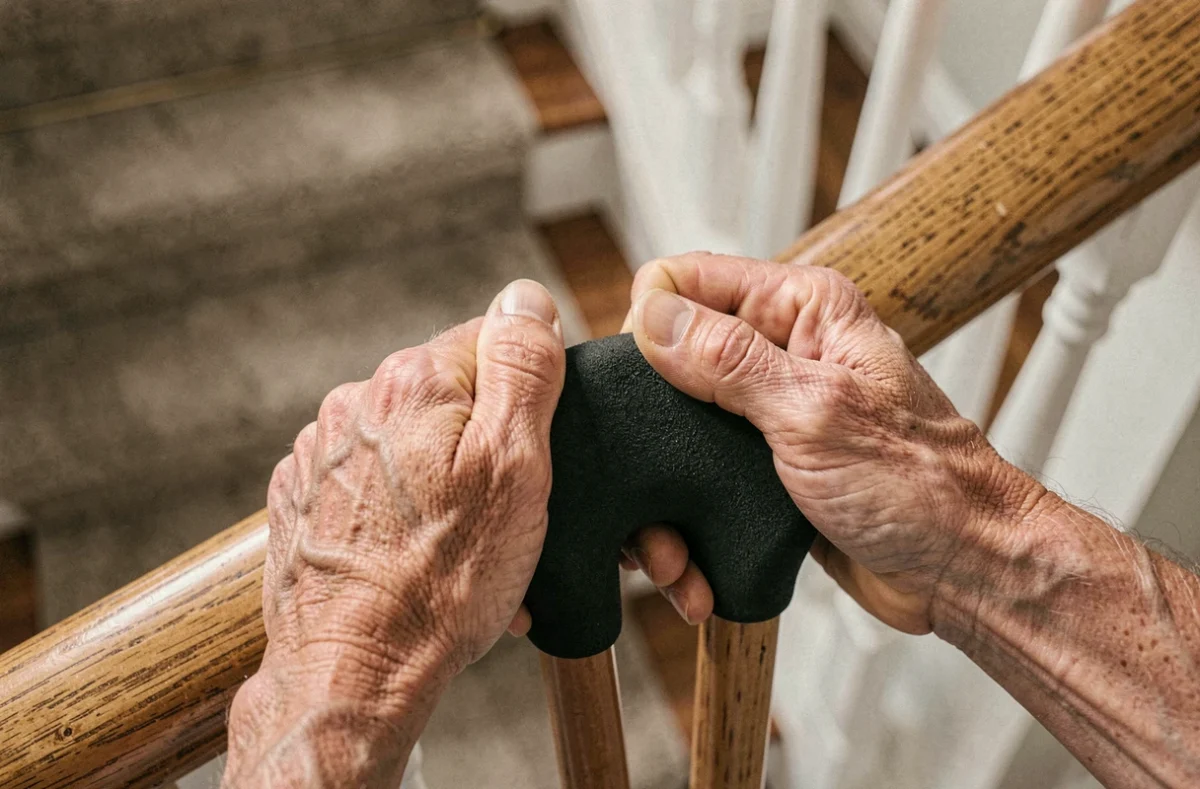
If pain appears in the wrists or palms, padded gloves or foam handle sleeves can reduce pressure. These accessories can be found at pharmacies or medical supply retailers.
Crutches are a temporary tool, not a permanent constraint. Precise adjustment, mastered walking technique, and a few daily precautions transform this recovery period into a step taken without unnecessary pain. Your physiotherapist remains the best resource to adjust your progress over the weeks.