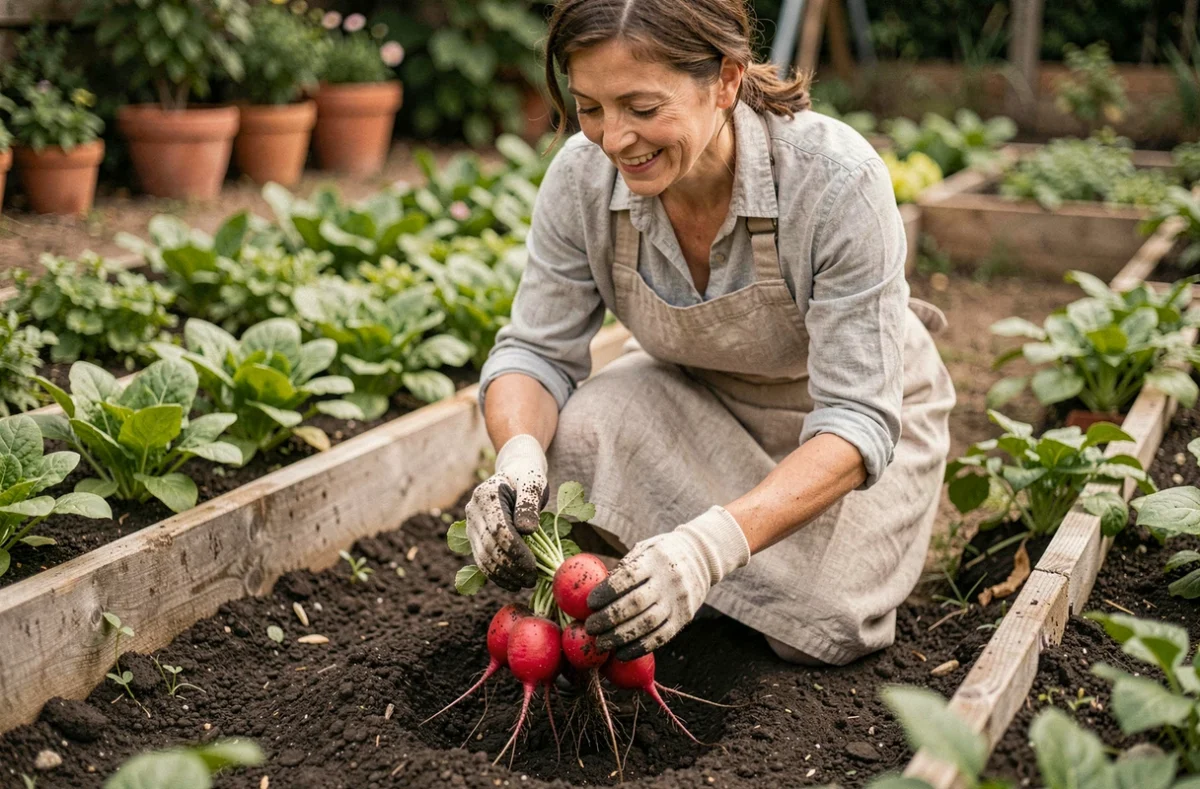
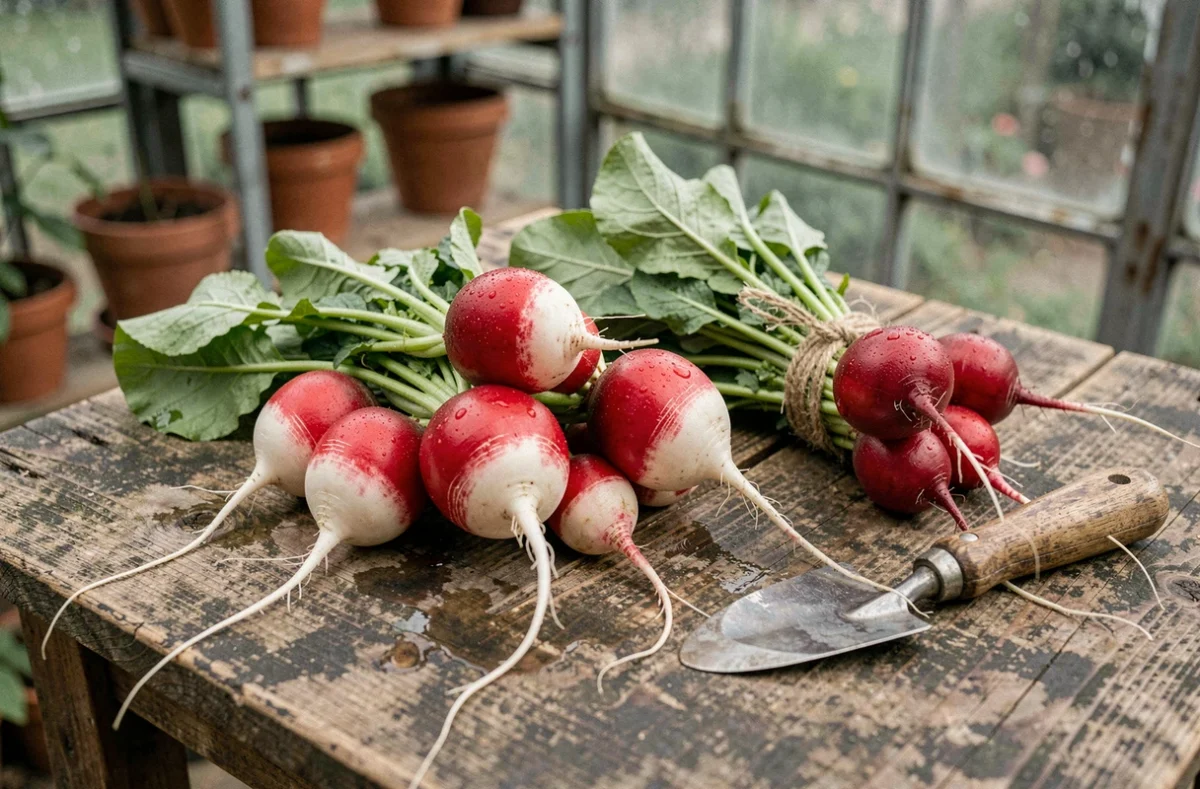
Your radishes are producing long, thin stems and plenty of leaves, but the roots are still as skinny as a thread. This common problem in the vegetable garden is rarely caused by just one factor. Soil, sowing time, choice of variety: each one affects the radish’s ability to form a plump, crisp root. Understanding how these factors work makes it easier to get things right in your next row.
Too much nitrogen in the soil: the hidden cause of leggy radishes
Other gardening guides focus on watering and sowing density. They often overlook a decisive factor: soil nutrition. A recent application of fresh manure or nitrogen fertilizer encourages the radish to produce foliage instead of swelling its root.
The mechanism is simple. Nitrogen stimulates the growth of above-ground parts. The radish then receives a signal that favors leaves at the expense of the hypocotyl—the swollen part you want to bite into. Too much nitrogen produces abundant tops and meager roots.
Before sowing, check what the plot has received recently. A bed enriched with horse manure three weeks earlier is a poor choice for radishes. Choose soil that hasn’t been amended with nitrogen for several months, or a bed where legumes were previously grown.
Several tips can help you prevent radishes from becoming leggy by adjusting fertilization and their place in the crop rotation.
Compacted soil or soil full of stones creates a different but equally troublesome problem. When an obstacle blocks the root, it becomes misshapen or stays threadlike. Loosening the top four inches of soil with a hand fork and removing large debris is enough to free up the space it needs.
Sowing depth and spacing: two adjustments that can transform your harvest
Have you noticed that some radishes literally push themselves out of the soil as they grow? That’s a sign they were sown too shallowly. When the seed is placed just beneath the surface, the young seedling doesn’t have enough anchorage. It stretches toward the light instead of growing downward.
Sow seeds half an inch deep, no shallower. Gently firm the soil over them with the back of your hand. This contact between seed and soil retains moisture and guides the root downward.
Spacing plays a similar role. Seeds sown too close together compete underground. Each radish gets less water and fewer nutrients, so its root stays small. Thin seedlings to about 1¼ inches apart as soon as the cotyledons (the first two small, round leaves) have fully opened.
- Sow in rows about four inches apart to make thinning easier and improve air circulation.
- Place a seed about every ¾ inch, then remove excess seedlings after they emerge.
- Water gently with a fine spray just after sowing to settle the soil around the seeds without washing them out.
Radish varieties suited to the season: an often-overlooked choice
Sowing a summer variety in November under a tunnel is almost guaranteed to produce a row of leggy radishes. The plants don’t get enough light to develop their roots, even if the temperature under cover is suitable.
So-called “forcing” varieties are designed for short days and low light. They grow with fewer hours of sunshine than summer varieties. For spring sowing outdoors, classic varieties such as round or half-long radishes are ideal.
Summer heat creates the opposite problem. High temperatures cause radishes to bolt quickly. The roots stay small and become hollow or fibrous. In summer, choose bolt-resistant varieties and sow preferably in the late afternoon, when the soil starts to cool.
Shade in hot weather: helpful, but use it sparingly
Putting up temporary shade cloth protects radishes from the scorching July sun. Just don’t confuse this short-term protection with a permanently shady spot. A radish that doesn’t get enough light day to day will produce long tops and a root that fails to grow, even if the cool conditions keep it alive.
Shade doesn’t replace sowing at the right time. It’s a useful addition when the season calls for it.
Bolted or hollow radishes: what to do with a failed row
Your radishes have become leggy, and a flower bud has already appeared on the stem. Should you pull them all out? Not necessarily. Depending on how far along the plants are, you still have some practical options.
Harvest before it’s too late
A radish that’s starting to turn hollow isn’t a lost cause if you pick it right away. It will taste sharper and feel less firm, but it’s still good grated or cooked in soup. Don’t rely on the harvest time printed on the seed packet: do a test harvest by pulling one radish every two or three days as soon as the leaves look vigorous.
Use the leaves and save the seeds
Radish tops are edible and full of flavor. Wash them, then make them into soup or pesto, or simply sauté them in a pan with a drizzle of olive oil. They’re a leafy vegetable in their own right.
If the plant is already flowering, let a few plants complete their cycle. The siliques (small, elongated pods) that form after flowering contain seeds you can harvest once they’re dry. This way, you’ll have your own seeds for the next season.
- Pull out bolted plants you aren’t keeping for seed to make room for a new sowing.
- Resow the same row right away if the season allows: quick-growing radishes germinate fast.
- Store harvested seeds in a paper envelope in a dry place away from light.
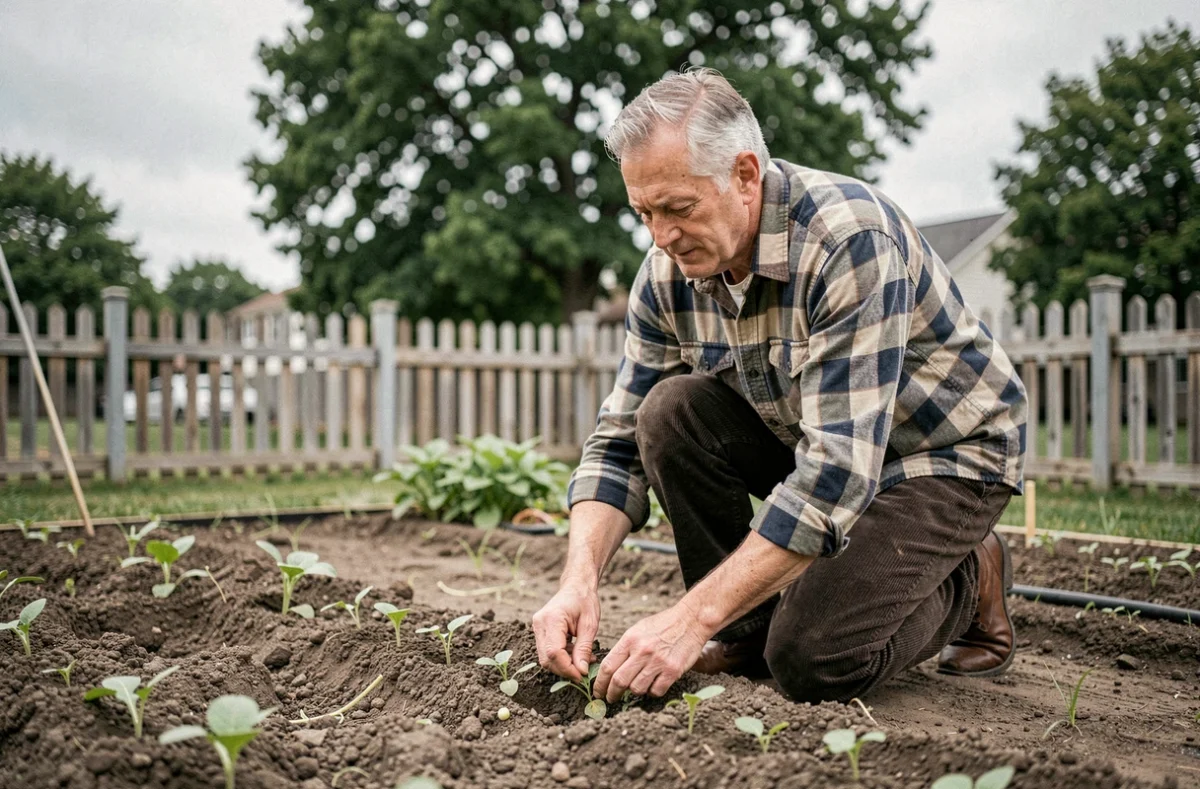
A failed row of radishes isn’t a waste of time. You can eat the leaves, save the seeds, and sow the cleared bed again within a few days. Radishes are one of the quickest vegetables to grow again. Adjust the depth, space out the seeds, check the soil’s nitrogen levels, and your next harvest will produce plump, round, crisp roots.