
Screwing in a shelf, adjusting a board, taking apart a seized mechanism: these tasks come up in almost every DIY project. Choosing the right T-handle tools for your toolbox makes every step easier and saves you trips to the store. Here’s a carefully selected range focused on the tools you’ll actually use day to day, with practical tips to help you choose the right ones.
T-handle wrenches and T-handle screwdrivers: know the difference before you buy
They look similar, but they’re used for very different jobs. A T-handle wrench tightens or loosens hex bolts or hex socket screws. A T-handle screwdriver, on the other hand, drives standard screws (Phillips, slotted, Torx) with greater torque thanks to its crossbar handle.
When you hold a straight Allen key between your thumb and forefinger, the torque you can apply is limited. A T-handle multiplies torque without straining your wrist, making all the difference when dealing with a seized screw or a bolt tightened as far as it will go.
Before putting together your set, identify the fasteners used around your home: flat-pack furniture (hex socket screws), appliances (Torx), woodworking (Phillips screws). Starting with your actual needs helps you avoid accumulating bits you’ll never use. If you’re unsure which of several options to choose, this comprehensive guide to essential T-tools for DIY can help you see things more clearly.
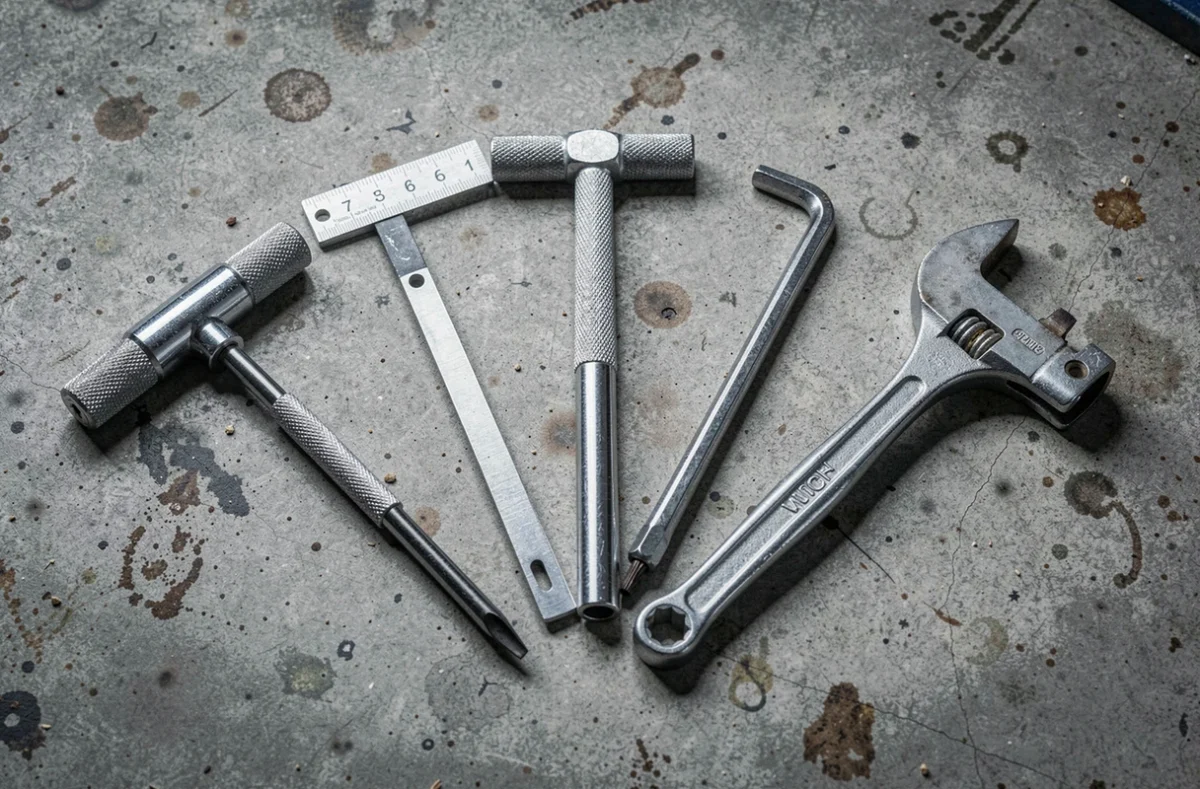
Auger, trowel, pincers: three often-overlooked T-tools
A hand auger drills holes in wood without electricity. It’s useful for outdoor projects (fence posts, pergola posts) where plugging in a drill isn’t always possible. The design is simple: a spiral bit and a T-handle that you turn with both hands.
A trowel is an essential tool for any light masonry work. Grouting, applying filler, laying tiles: it comes in handy whenever you need to spread or smooth a paste-like material. Choose a stainless steel blade if you work with cement-based products, as carbon steel rusts quickly when exposed to moisture.
Finally, pincers pull out nails, cut wire and straighten bent nails. Their curved jaws provide leverage that ordinary pliers can’t match. A forged model with hardened jaws will last much longer than a cheap stamped one.
Marking gauge and carpenter’s T-square: mark accurately before cutting
Have you ever ruined a cut because the cutting line was off by a millimeter? A marking gauge solves that problem. This marking tool draws a line parallel to an edge, always at the same distance. Set it once, then repeat the mark on as many pieces as needed.
A carpenter’s T-square checks and marks right angles on boards. It consists of a metal blade fixed perpendicular to a wooden or aluminum stock. A good carpenter’s T-square ensures all your saw cuts are square.
Both tools are inexpensive, take up little space and save a considerable amount of time on woodworking projects. Skipping them is like assembling furniture without checking the measurements.
What to look for in marking tools
- The marking gauge blade should be thin and rigid, made of hardened steel, so it scores a clean line in the wood without wandering
- The T-square stock should sit perfectly flush against the edge of the board: check for any play by placing the tool flat on a precision-machined surface
- Choose a marking gauge with a locking screw rather than a friction lock, as it holds its setting better over time and won’t slip while marking

Saw, drill and toolbox: round out your kit for every job
T-handle tools don’t work alone. They’re part of a broader toolkit. Three categories deserve special attention when putting together a well-rounded toolbox.
The right saw for the material
A universal-tooth handsaw cuts softwood and particleboard. For fine cuts in hardwood, a Japanese pull saw produces a cleaner cut. Choosing a saw to suit the material helps prevent broken blades and crooked cuts.
The drill-driver as the workshop’s workhorse
A drill-driver replaces a manual screwdriver for longer jobs and drills into most common materials (wood, thin metal, plaster). Before buying a model, check one often-overlooked detail: whether replacement batteries and motor brushes are available.
The European battery regulation sets out removal and replacement requirements for certain portable batteries incorporated into products, starting on February 18, 2027. Until then, checking that spare parts are actually available is still the best habit before making any purchase.
Organizing your toolbox
Throwing screwdrivers, T-handle wrenches and pincers into the same bin slows down every job. Organizing by task works better than organizing by tool type:
- A “fastening” compartment holds T-handle screwdrivers, Allen keys, a drill-driver and bits
- A “marking and measuring” compartment holds a marking gauge, carpenter’s T-square, tape measure and carpenter’s pencil
- A “cutting and dismantling” compartment holds a saw, pincers and diagonal cutters
Grouping tools by task rather than by type cuts down on time spent searching and helps prevent things being left behind on the job.
DIY tool safety and maintenance
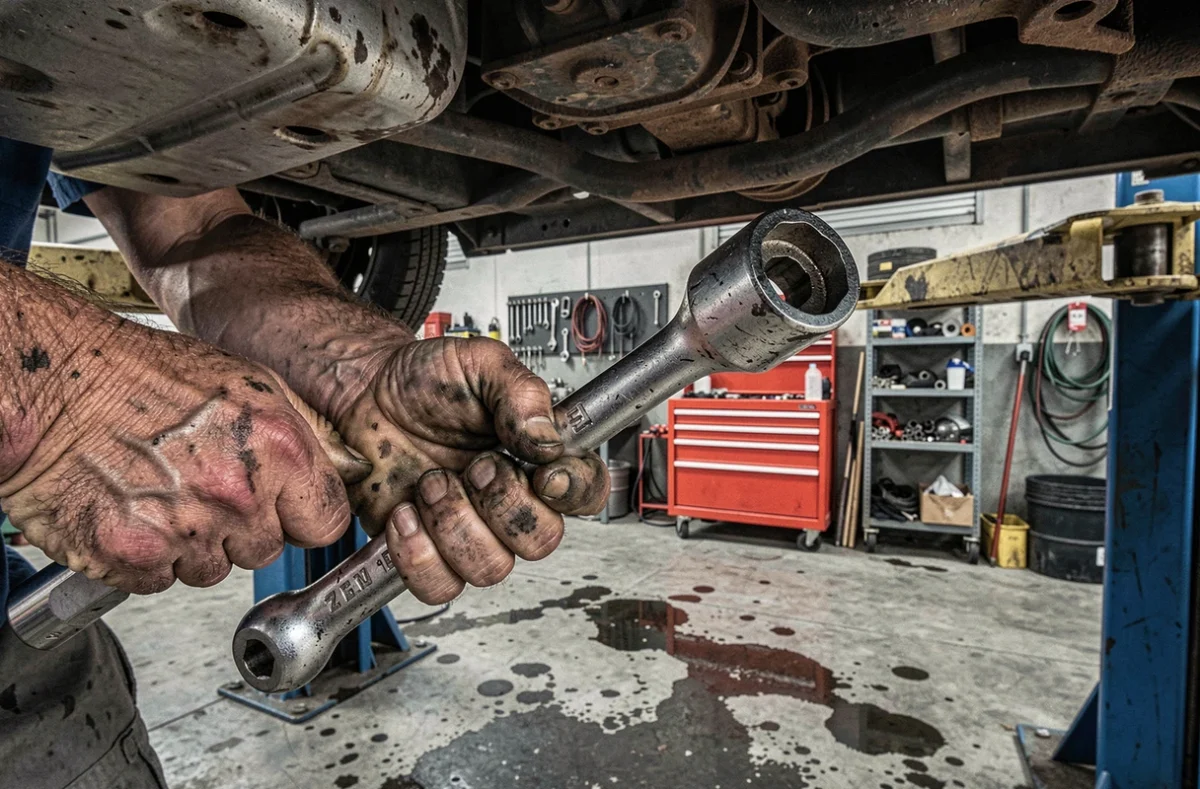
A poorly maintained tool can be dangerous. Pincers with worn jaws slip off the nail instead of gripping it. A marking gauge with a rounded point no longer scores a clean line.
After each use, wipe metal parts with a dry cloth. A drop of petroleum jelly on the joints (pincers, pliers) helps prevent corrosion. Store cutting tools in sheaths or separate compartments to protect the edges—and your fingers.
Safety glasses aren’t just for use with an angle grinder. A wood splinter can fly off when you strike a chisel with a hammer. Keep them in your toolbox alongside your tape measure.
Building up your collection of T-handle tools takes time, and that’s perfectly normal. It’s better to buy three quality tools than ten flimsy ones that end up at the back of a drawer after two uses.