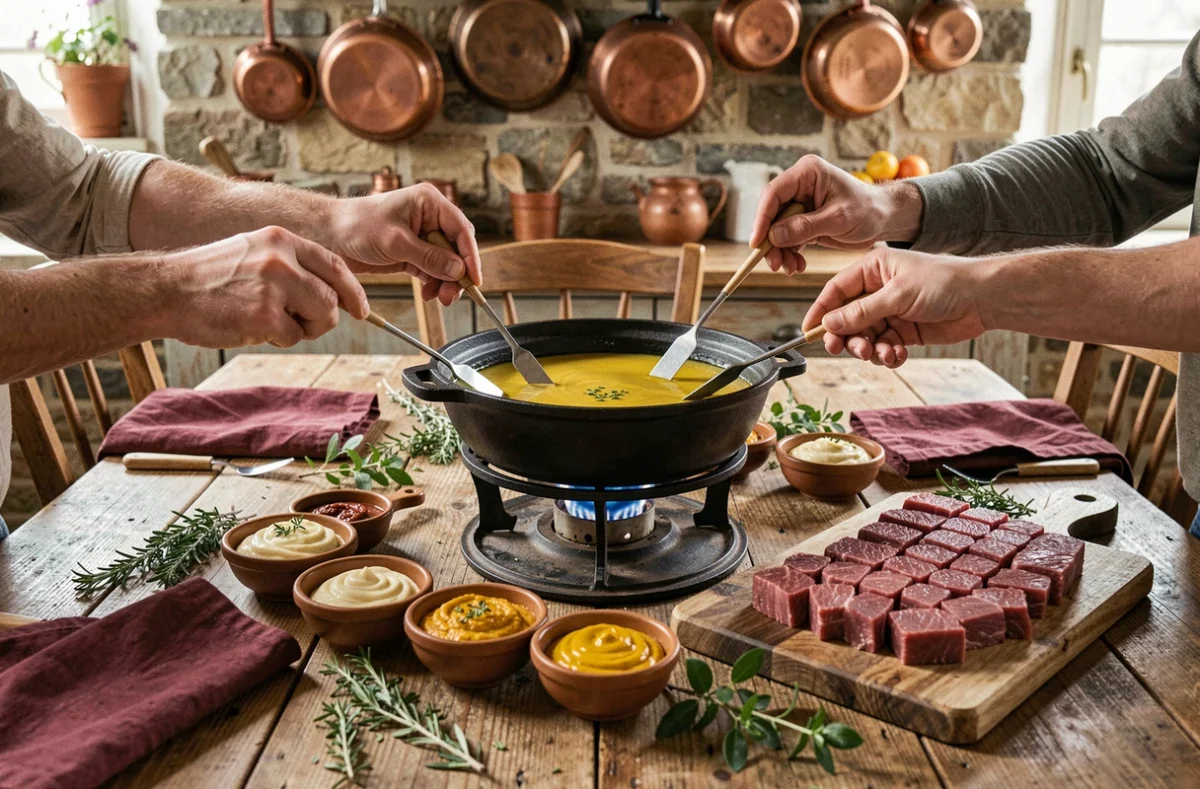
Bourguignonne fondue brings everyone together around a pot of bubbling oil, but what you serve alongside it is what turns an ordinary meal into a truly indulgent occasion. Sauces, raw vegetables, starchy sides and legumes shape the meal just as much as the meat itself. The key is to choose them thoughtfully, especially when the meal stretches on and raw meat sits alongside the rest of the food for more than an hour.
Raw meat and homemade sauces: set the table without the stress
Have you noticed that bourguignonne fondue is one of the few meals where everyone handles raw meat right next to their plate? That detail changes how you should think about the sides.
The most useful rule is simple: set out two plates per person. One is for the raw meat; the other is for cooked pieces, sauces and raw vegetables. Keeping them separate helps prevent cross-contamination without requiring a complicated protocol.
As for sauces, béarnaise and homemade mayonnaise contain raw egg. For young children, pregnant women and older adults, a yogurt or fromage blanc sauce is a raw-egg-free alternative that’s just as delicious. Add fresh herbs, a squeeze of lemon and a touch of mustard for a sauce that easily holds its own. For more ideas, La Cuisine de Watoote’s tips include several suitable recipes.
One last tip: take the meat out of the fridge in small batches rather than all at once. Keep the rest chilled and refill the plates as the meal goes on.
Sauces for bourguignonne fondue: five versatile options for every taste
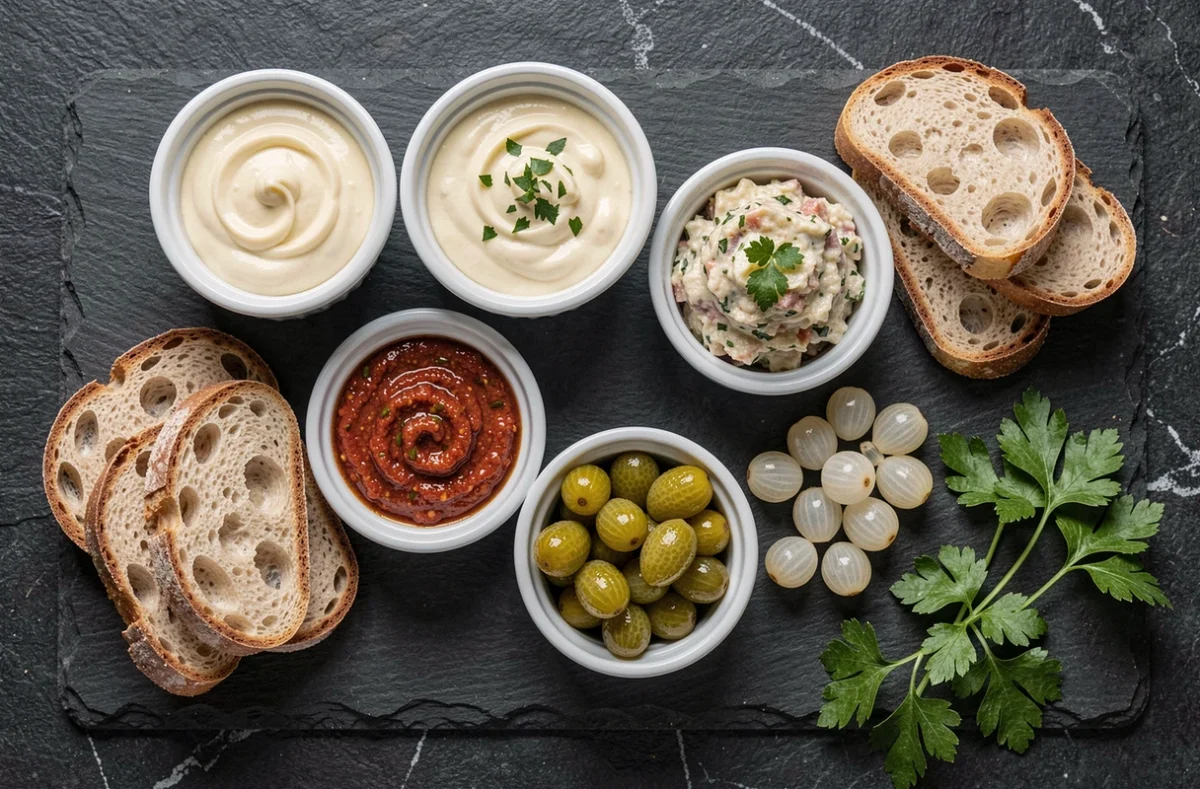
Three to five sauces are plenty. Any more and the ramekins crowd the table, with half of them barely touched. The aim is to offer a range of flavors rather than several similar recipes.
- A mustard sauce (Dijon mustard, crème fraîche and chives) adds classic tang and takes just two minutes to make.
- A spicy tomato sauce (tomato paste, mild chili and garlic) provides a tangy contrast to the richness of the fried meat.
- A fromage blanc sauce (fromage blanc, shallot and chervil) makes a mild, versatile option that’s popular with children and guests who avoid raw egg.
- A curry sauce (yogurt, mild curry powder and honey) brings a pleasantly surprising sweet-and-spicy note to the beef.
- Traditional béarnaise (egg yolk, clarified butter and tarragon) remains a favorite among enthusiasts. If it isn’t made with pasteurized ingredients, reserve it for healthy adults.
Varying the textures matters just as much as varying the flavors. A thick sauce, a runny one and a chunky sauce with chopped gherkins create contrasts that keep every bite interesting.
Vegetable sides and starchy foods: balance the meal around the beef
Bourguignonne fondue is a meal centered on red meat. French dietary guidelines recommend limiting red meat to 500 g per week, according to Santé Magazine (November 2026). What you serve alongside the fondue pot can therefore help keep beef portions in check without leaving anyone feeling deprived.
Legumes and plant-based protein
A green lentil or chickpea salad adds plant-based protein and a satisfying texture. It’s more than a filler side: it’s a substantial accompaniment that lets some guests eat less meat while still enjoying the meal.
Dress the lentils with olive oil, sherry vinegar and finely chopped shallot. Legumes can be prepared the day before, freeing up time on the day.
Raw and cooked vegetables
Classic raw vegetables—cherry tomatoes, cucumber sticks, radishes and endive leaves—work well because they add crunch and freshness to balance the richness of the fried food. But don’t limit yourself to a plain platter of raw vegetables.
Thinly sliced button mushrooms marinated in lemon, diced cooked beets or oven-roasted carrots with cumin offer something different. Cooked vegetables add a mellow richness, while raw vegetables bring freshness.
Starchy sides: potatoes and bread
Steamed potatoes are the most common starchy side for bourguignonne fondue, and for good reason: they soak up sauces nicely and take little effort to prepare. Choose waxy varieties (Charlotte, Amandine) that hold their shape on the plate.
Fresh bread cut into large pieces rounds out the spread. A crusty country loaf or herb fougasse makes a welcome change from standard white bread.
Putting together a complete bourguignonne fondue spread
Why do some fondue spreads feel like a disjointed buffet? Usually because everything is put out at once, with no thought given to how the meal will unfold.
Set out the sauces and raw vegetables before heating the oil. Guests can nibble and sample the sauces, so the meal gets underway without a wait. Bring out the potatoes and lentil salad with the meat. Keep the bread within reach throughout the meal.
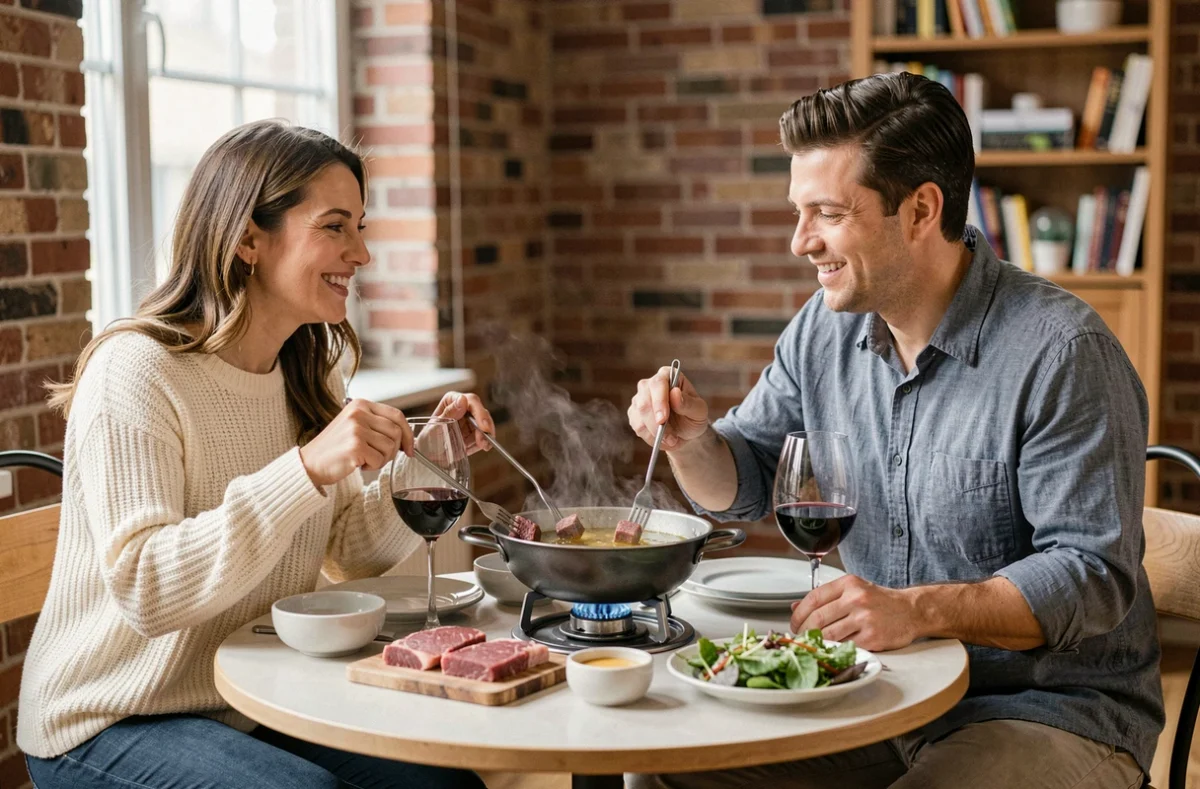
Plan on about three sauces, two types of vegetables and one starchy side for a balanced meal without overcrowding the table. Serve the green salad at the end to refresh the palate before dessert.
Think about the layout, too: place the sauce ramekins in the center, the raw meat plates near the fondue pot and the sides around the edges. Everyone should be able to reach the sauces and sides without reaching over the boiling oil.
Bourguignonne fondue is a meal to linger over. With well-chosen sides, the table stays inviting even when the cooking slows down, and no one leaves having eaten nothing but fried meat dipped in mayonnaise.