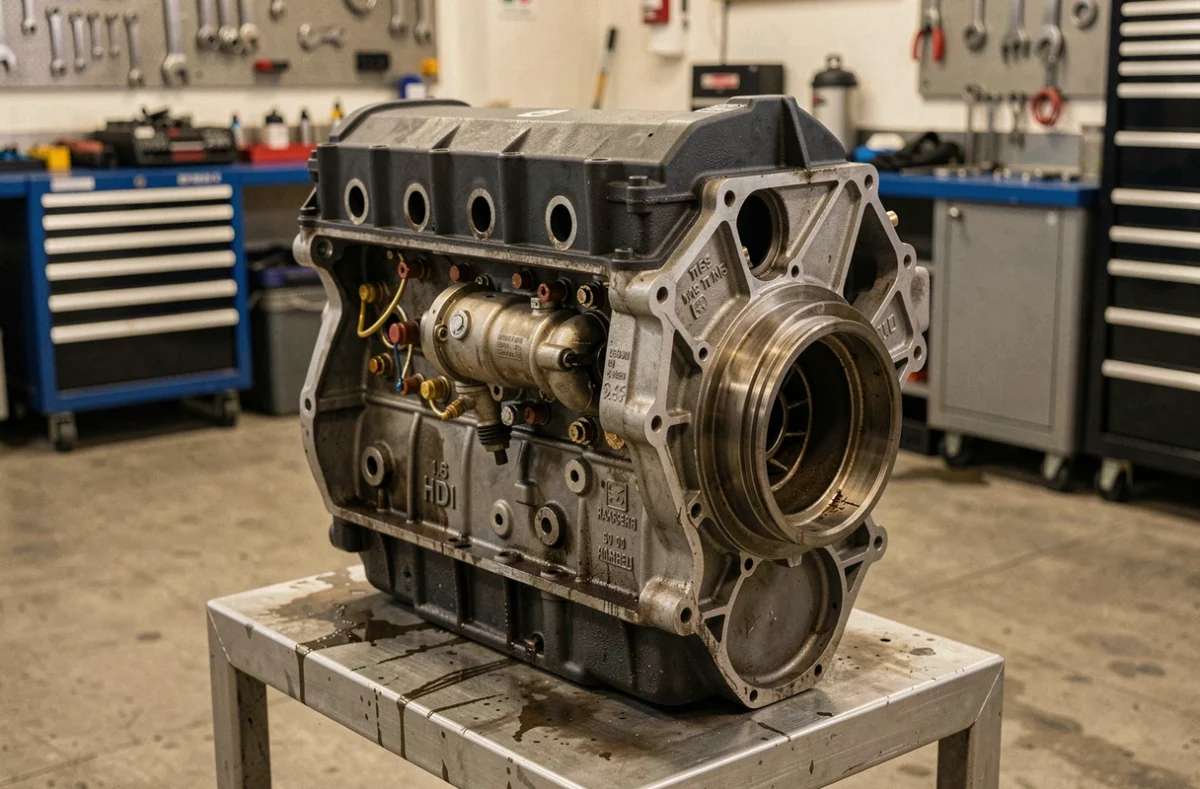
The 1.6 HDi engine, developed as part of the PSA–Ford diesel joint venture, has powered a large share of the Peugeot, Citroën and Ford Europe ranges since the early 2000s.
Behind the shared name is the DV6 family, which spans several generations with different cylinder head designs, injection systems and emissions-control equipment. Assuming that a 1.6 HDi and a 1.6 TDCi are interchangeable simply because they have the same displacement confuses the marketing name with the technical reality.
Engine and injection references: what the DV6 code doesn’t tell you
The DV6 family includes 8- and 16-valve engines, with outputs ranging from 75 hp to 115 hp depending on the generation. The move from some 16-valve versions to 8-valve versions brought changes to the cylinder head, turbo and injection system. Two engines with the same displacement and similar power output are therefore not necessarily a direct swap.
The injection system is a good example of this difference. A 2022 Continental parts catalogue lists a Continental injector for certain 112/115 hp DV6C versions, including the corresponding Ford Focus 1.6 TDCi models. By contrast, several older 16-valve versions use Bosch injectors. The reference number stamped on the part and the engine code are more reliable than the HDi or TDCi marketing name alone.
A detailed article on Peugeot and Ford 110 hp DV6 engine compatibility looks at possible crossovers between the two manufacturers, starting with the exact engine code rather than the marketing designation.
Emissions control and electronics: the real barriers to swapping engines between brands
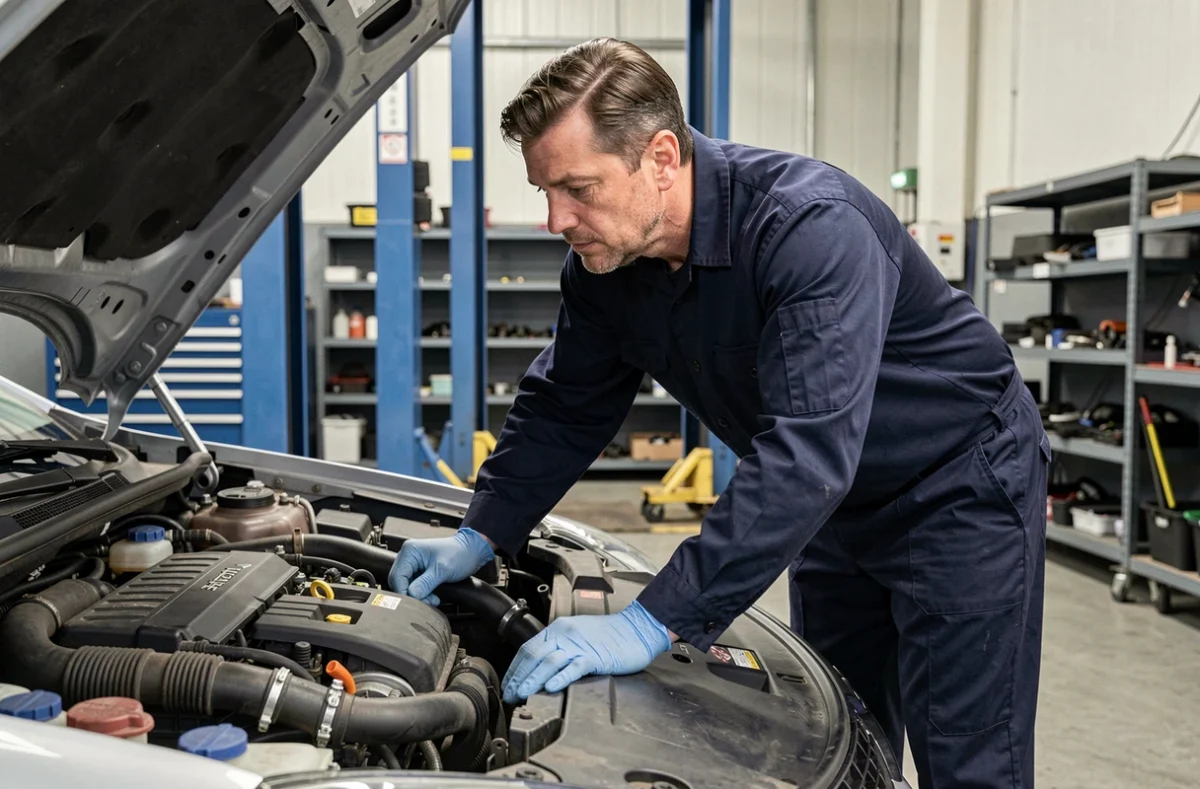
Mechanically, a DV6 engine from a Peugeot 308 may look almost identical to one from a Ford C-Max. Compatibility often ends when it comes to emissions-control equipment and onboard electronics.
For particulate filtration, some PSA applications use an additive (cerine) to regenerate the DPF, while other versions, notably BlueHDi models, feature an SCR system with AdBlue. Ford uses its own regeneration strategies, controlled by a different engine ECU. The wiring harness, differential pressure sensors and DPF management map cannot be transferred from one vehicle to another without reprogramming—and may even require a complete ECU replacement.
The practical takeaway: an engine that is mechanically similar is not a plug-and-play replacement. Integration with the vehicle’s electronic systems (OBD, dashboard, transmission management) means compatibility must be checked part by part, using the VIN rather than a simplified specification sheet.
Finding the right part using the VIN: a practical approach
Rather than looking for an engine from another brand that might fit, the reliable approach is to compare the references for the complete engine, injection and emissions-control setup. Check the following before buying a used part or replacement engine:
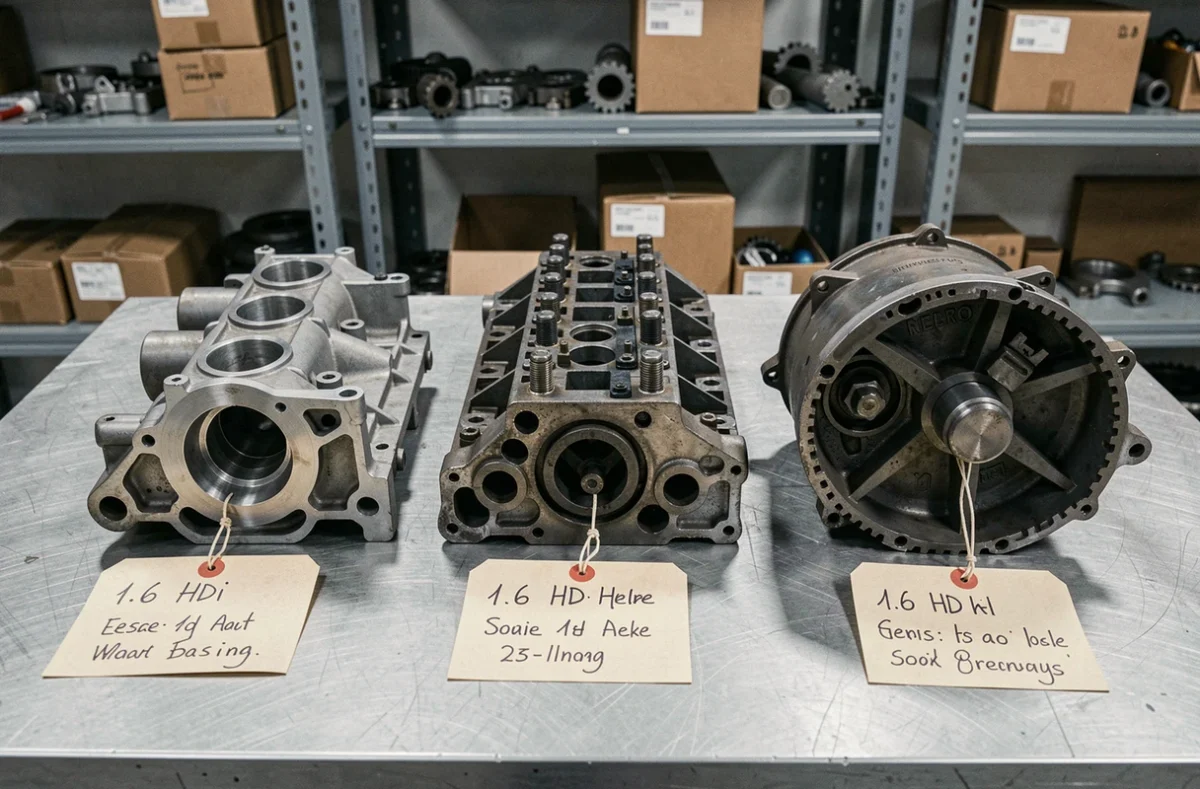
- The engine code stamped on the block (for example, 9HZ, 9HR, 9HX for PSA, or the T1DA/T1DB variants for Ford) identifies the exact generation and corresponding cylinder head.
- The injector reference (Continental or Bosch) determines the common rail and injection ECU. Mixing the two systems will not work.
- The emissions-control setup (DPF with cerine, DPF without additive, or SCR with AdBlue) must match the engine ECU’s calibration in the recipient vehicle.
- The ECU serial number and software version must be compatible with the vehicle’s wiring harness. Swapping the ECU between a Citroën C4 and a Ford Focus with the same DV6 generation may require specific reprogramming.
Checking compatibility by VIN, through manufacturer networks or technical databases, helps avoid unpleasant surprises that can turn apparent savings into extra adaptation costs.
A common pitfall: injector seals and turbo lubrication
Regardless of the brand, DV6 engines share a well-documented failure chain: leaking injector seals can contaminate the turbo lubrication circuit. When replacing the turbo, treating only the symptom without checking the injector seals and oil circuit often leads to the problem recurring quickly.
This applies just as much to a Peugeot Partner as to a Ford Fiesta TDCi. The wear part is shared, but access and the surrounding mechanical layout vary by vehicle, affecting labour time.
French regulations: replacing an engine with one from another brand
Article R321-16 of the French Highway Code requires a new approval when a vehicle has undergone a significant modification. Changing a vehicle’s power output or fuel type may require individual vehicle approval (RTI), a lengthy administrative process involving an inspection by the DREAL.
Replacing a 1.6 HDi with a 1.6 TDCi of equivalent power does not exempt you from this check. The authorities do not assess the vehicle based on whether the engines belong to the same family, but on whether it still complies with the type for which it was approved. An identical engine (same code, same power, same emissions standard) from another vehicle of the same model should not cause any issues. An engine from another brand, even a close technical relative, changes the administrative picture.
The distinction between a like-for-like replacement and a modification is not always clear-cut. Checking the specific case with the DREAL before starting work is the only way to avoid a failed roadworthiness test or a non-compliant registration document.
The industrial partnership between PSA and Ford produced mechanically similar engines, sometimes almost identical. That technical kinship does not mean they are automatically interchangeable. The right approach is to start with the VIN, compare part references one by one, and check the regulatory requirements before undertaking any engine swap.