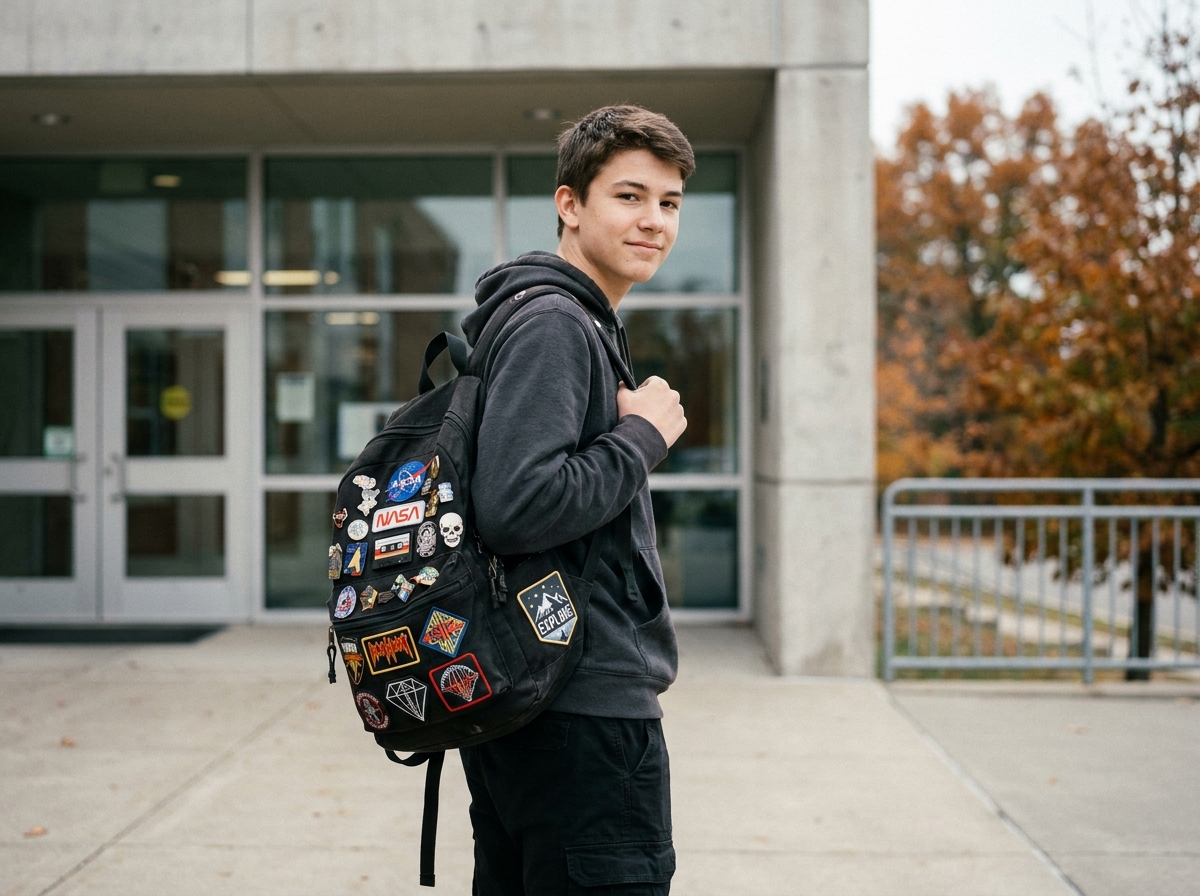
A backpack is something we carry every day. At work, in class, on hikes, during commutes. Yet, most of them look alike. Personalizing your backpack with patches allows you to transform a mundane accessory into an item that tells a story. However, you need to choose the right type of patch and the right method of attachment to ensure the result lasts over time.
Material of the backpack and compatibility with patches
Before choosing a patch, check the label on your backpack. The material determines everything else: the method of attachment, durability, and even the visual effect.
A cotton canvas bag accepts almost all techniques. The fabric can withstand the heat of an iron, absorbs sewing well, and offers a flat surface that facilitates adhesion. However, nylon, vinyl, and faux leather do not support heat bonding. An iron that is too hot on polyester can melt the fiber or leave an irreversible shiny mark.
Do you have a technical backpack with a water-repellent coating? The waterproof layer often prevents the heat-activated adhesive from penetrating the fabric properly. The patch will hold for a few days, then peel off due to friction.
When opting for a custom PVC patch, sewing or Velcro attachment is often preferable, as PVC does not require heat and withstands moisture well, making it suitable for bags made of synthetic materials.
Attaching patches to a backpack: sewing, heat-activated, or combined
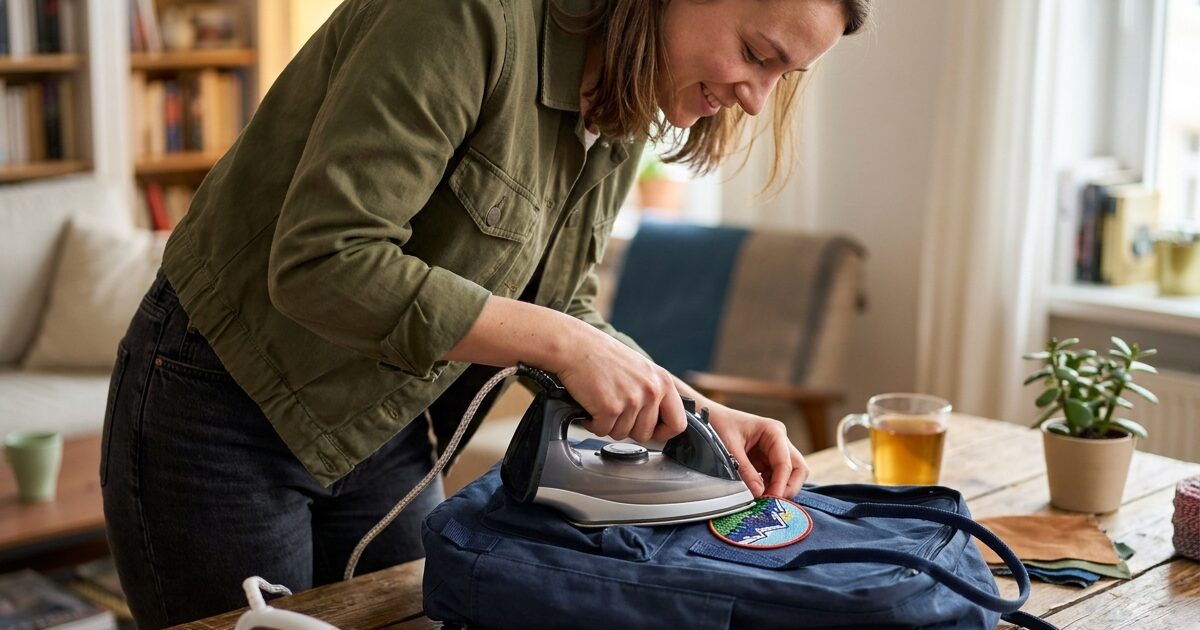
Heat-activated adhesive is appealing because it is quick. You place the patch, run the iron over it, and it’s done. For a cotton tote bag that is used infrequently, it works. For a backpack used daily, it’s a different story.
Why heat-activated adhesive alone is not enough for heavy use
The straps pull on the back of the bag, repeated openings and closings deform the fabric, and the contents constantly press against the walls. A patch that is only heat-activated will peel off after a few weeks of regular use, especially if the bag goes in the washing machine. Hot washes and the dryer accelerate the process.
Sewing as a durable attachment method
Sewing a patch by hand takes about ten minutes with sturdy thread and a suitable needle. The result withstands friction, washing, and deformation of the bag. For a classic embroidered patch, a few stop stitches around the edge are sufficient.
The most reliable method combines the two: heat activation to position the patch, then sewing to secure it permanently. The heat-activated adhesive holds the piece in place while you sew, preventing shifts.
- Sewing alone: the most durable, suitable for all fabrics, requires a bit of patience and a curved needle if the bag is rigid.
- Heat-activated alone: quick, acceptable on cotton for light use, not recommended on nylon or for a bag used every day.
- Heat-activated then sewing: the best compromise between ease of application and long-term durability.
Placement of patches: areas to prioritize and pitfalls to avoid
A poorly placed patch can hinder the use of the bag or peel off quickly. The surface for placement and the geometry of the bag are crucial.
Test a paper template the size of the patch before attaching it. Temporarily stick it with tape, then open and close the bag, adjust the straps, put the bag on your back. If the template obstructs a zipper, covers a useful pocket, or is located on a very curved area, change its position.
Flat and accessible areas yield the best results. The front flap, the central back panel (if the bag has one), or the top of the main compartment are stable locations. Areas near the side seams pose problems: the fabric is often doubled or reinforced there, complicating sewing, and the curve prevents the patch from lying flat.
Embroidered, PVC, or woven patches: what finish for what use
The type of patch changes the visual aspect as much as the durability.
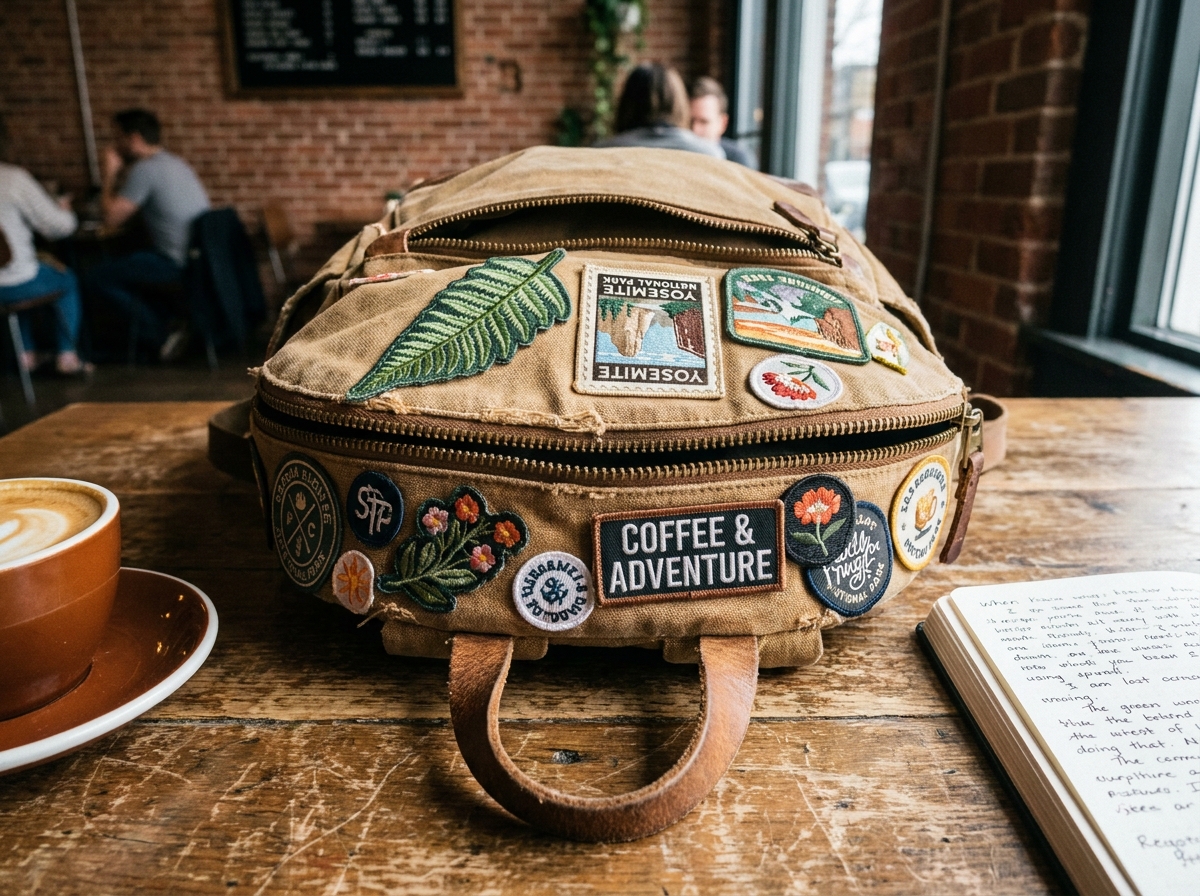
Embroidered patches offer a classic textile finish with relief. They blend naturally on a canvas or denim bag. The embroidered thread may fray over time if the bag rubs against a chair back or a public transport seat.
PVC patches have a smooth, waterproof surface that is easy to clean. They retain their colors and details even after months of exposure to rain or sunlight. For a technical bag or frequent outdoor use, PVC maintains a new appearance much longer than embroidered fabric.
Woven patches, thinner than embroidered ones, reproduce detailed patterns with a flat surface. They are suitable for complex designs but are more sensitive to abrasion.
- Embroidered: relief, artisanal look, ideal on canvas bags, sensitive to wear from friction.
- PVC: smooth and waterproof surface, durable colors, suitable for synthetic bags and outdoor use.
- Woven: fine detail, low profile, suitable for complex patterns but more fragile to abrasion.
Personalizing without compromising resale or versatility of the bag
Sewing a patch directly onto the fabric leaves needle holes if you decide to remove it. On a branded or expensive backpack, this permanent modification can pose resale issues.
Velcro offers an interesting alternative. Some tactical or hiking backpacks already incorporate Velcro panels. For others, sewing a strip of Velcro instead of the patch itself allows you to change the decoration according to your mood or context, without damaging the bag.
A removable patch on Velcro can be taken off in two seconds for a job interview or professional meeting. The same bag transitions from the office to the weekend effortlessly.
Personalizing a backpack with patches works well as long as you respect the compatibility between the bag’s material and the attachment method. A tested template before application, careful sewing, and a patch choice suited to the actual use of the bag make the difference between a customization that lasts and a patch that dangles after three weeks.