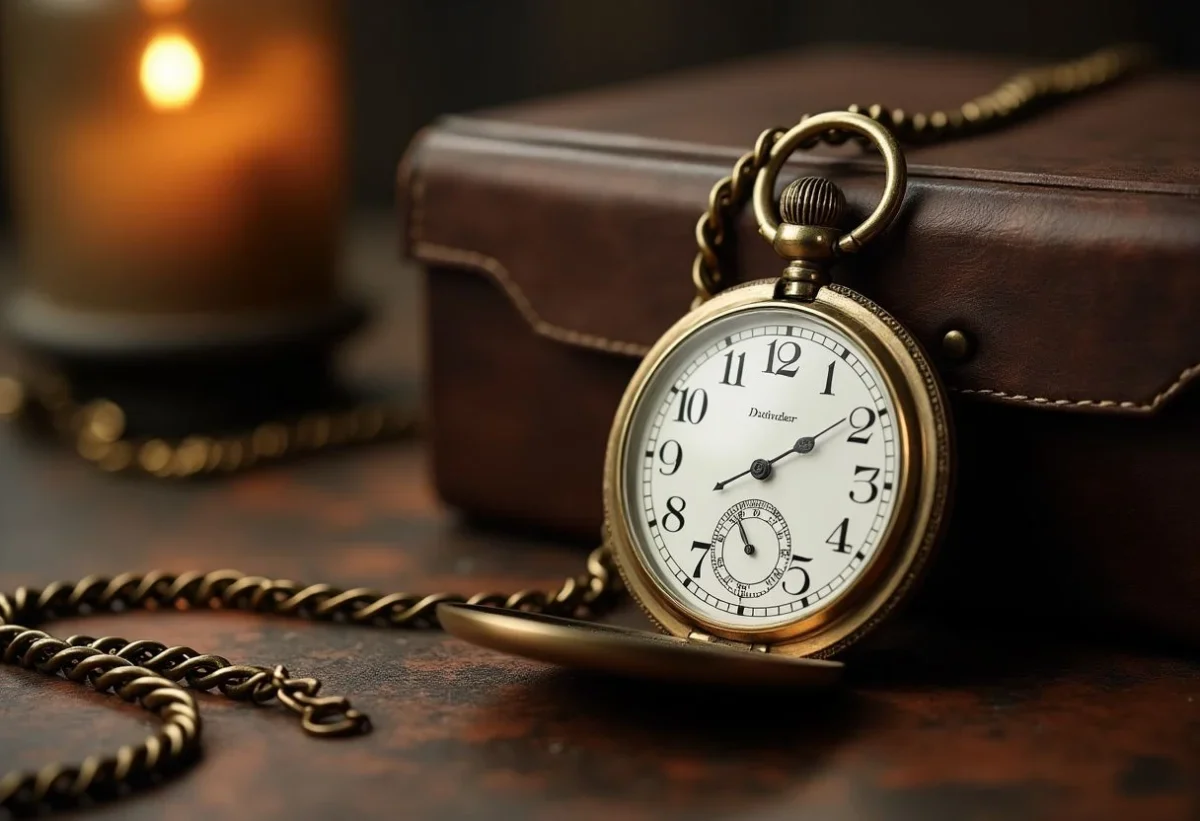
The pocket watch, often seen as a relic of the past, continues to embody timeless charm and sophistication that transcend the ages. With its delicately crafted case and elegant chain, it once transcended its utilitarian role to become a true fashion accessory, emblematic of a certain art of living. Nowadays, as the digital world tends to dominate our daily lives, this object from yesteryear is experiencing a resurgence of interest.
Origins and Evolution of the Pocket Watch
To truly appreciate the pocket watch, it is essential to delve into its rich and fascinating history. It has not always presented itself in the form we know today.
Initially, the pocket watch was a revolution in timekeeping. Invented in the 16th century, it allowed for the first time to carry time in one’s pocket. The first versions were bulky, but the enthusiasm for these objects drove watchmakers to compete in ingenuity to make them more refined and precise.
Its true glory days were in the 19th century, when the pocket watch became a symbol of social status. Worn by gentlemen concerned with elegance, it stood out for its visible mechanism and intricate details. The integration of a chain, often adorned with charms, became an integral part of its distinctive style.
With the advent of wristwatches in the 20th century, it gradually lost popularity. Its image metamorphosed from a daily accessory to a prized collectible, appreciated for its timeless beauty and artisanal craftsmanship.
Functionality and Aesthetics: A Perfect Duo
The pocket watch wonderfully combines functionality and aesthetics, allowing it to stand out in the world of horology.
- Functionality: Initially designed to provide an accurate reading of time, it often featured sophisticated horological complications such as moon phases or chronographs. The mechanical movement, the result of meticulous craftsmanship, embodies the know-how of watchmakers of the past.
- Aesthetics: The decorated cases, often engraved or enameled, captivate with their beauty and delicacy. The materials used range from common metals to precious metals, reinforcing the idea of an object that is both utilitarian and ornamental.
- Symbolism: Worn in the pocket of a waistcoat, it is accompanied by a chain that, in addition to being practical, becomes a style element. It embodies tradition, refinement, and the elegance of a bygone era.
The Pocket Watch: A Strong Comeback
Although long relegated to the background, the pocket watch is now experiencing a strong comeback, much like many other vintage accessories. It continues to attract those seeking authenticity and the elegance of past times.
The pocket watch is now asserting itself in contemporary wardrobes, reinterpreted by modern creators. It finds its place in a sophisticated style, adding a touch of class to any outfit.
Collectors and enthusiasts of vintage horology are particularly fond of it. The quest for rare models, often accompanied by captivating stories, fuels their passion.
From a technological perspective, the restoration and preservation of these old watches stimulate interest in artisanal trades and contribute to the longevity of traditional horological techniques.
Finally, the market for pocket watches, buoyed by prestigious auctions and specialized fairs, shows that it is far from disappearing. It remains a choice investment for those wishing to combine heritage and elegance.