
The Highway Code allows the transport of bulky objects on the roof of a vehicle, provided they do not compromise visibility, stability, or safety. A bed base, often longer than the vehicle itself, imposes particular technical constraints regarding securing and protection.
The risks of damaging the bed base or receiving a fine for non-compliance are often underestimated. However, there are proven solutions to optimize the available space, secure the load, and avoid any damage during transit.
What to anticipate before loading a bed base on the roof of your car
Before hoisting a bed base onto a car roof, it is essential to evaluate several key parameters.
The compatibility between the dimensions of the bed base and that of the vehicle is the first criterion to examine. A king-size or queen-size bed base significantly exceeds the standard size of a city car or an SUV. Carefully measuring the length and width is indispensable. The Highway Code allows a rear overhang of up to 3 meters, but no lateral overhang that could obstruct traffic is tolerated. The load must also be perfectly secured.
Planning the route in advance is equally important: weather, itinerary, height of parking lots or bridges… Once a bed base is on the roof, the total height of the vehicle changes. It is better to rely on secondary roads, avoid highways, and adjust driving to limit wind resistance. As speed increases or the wind picks up, the risks increase.
Preparing the installation of the bed base also requires equipping yourself with the right materials: sturdy roof bars, ratchet straps, and a protective cover against the elements. Before loading, check the strength of the bars, the solidity of the anchor points, and the proper weight distribution. An imbalance can make transport dangerous in turns or during hard braking.
To transport a bed base on the roof of a car safely, the detailed advice on the page “How to transport a bed base on a car? – Coupefile Immobilier” offers a precise guide to limit unforeseen events and handle all types of bedding, from a standard mattress to a king-size bed base.
What equipment and techniques ensure safe transport?
Transporting a bed base on the roof of a vehicle requires a minimum of preparation and the right accessories. Roof bars are the foundation: they must be chosen to be robust, certified, and capable of supporting the weight of the bed base. Their installation must be impeccable, with each attachment point carefully checked before departure. Without these solid elements, the stability of the load becomes uncertain.
To secure the bed base, prefer ratchet straps. Their tension can be adjusted precisely, preventing any unwanted movement of the bed base during transit.
Here are the rules to follow for securing the load:
- Two crossed straps, passed under the bars, ensure optimal support, even in the event of sudden braking.
- Avoid using ropes or elastic bungee cords from the start: they lack reliability for this type of transport.
To protect the bed base from the elements or a cloud of dust, a protective cover or, failing that, a sturdy tarp makes a difference. A specific cover for mattresses or bed bases remains the most reliable solution to keep the fabric clean and dry.
Before hitting the road, a final check is essential: ensure that the bed base does not excessively extend beyond the vehicle, and that the rearview mirror remains usable. For a king-size or queen-size, vigilance is crucial: weight and wind resistance increase the difficulties. Adjust your speed, limit acceleration, and take regular breaks to check the tightness of the straps. It’s better to prevent than to repair.
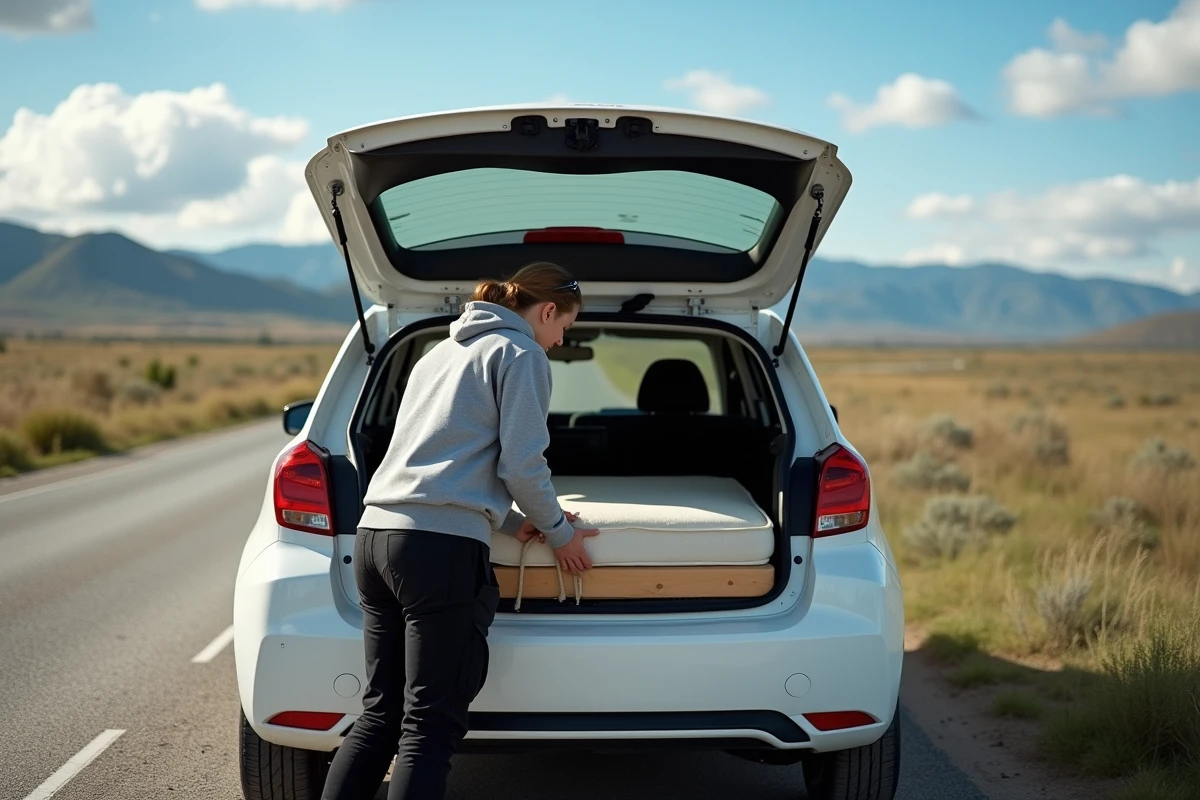
Maximizing safety and space: tips to protect the bed base and vehicle during transit
Moving a bed base on the roof of a car is not something to improvise. Managing space becomes crucial, especially during a move or when transporting a large model. Every centimeter counts: it is key to maintaining the stability of the load and protecting the bodywork.
Install the bed base well-centered, flat, and without excessive overhang. To protect the paint, slide non-slip mats or thick blankets underneath: a precaution that prevents scratches and dents, both during installation and while on the road.
A few simple rules can help limit risks:
- Opt for ratchet straps to ensure constant support, without crushing or damaging the bed base or roof bars.
- Regularly check the tension after several kilometers: vibrations can loosen the attachments.
- For an upholstered or slatted bed base, avoid excessive bending: some models cannot withstand it, while others accept slight curving, but never for long.
Utilize the interior space to distribute lightweight or removable items: linens, mattresses, accessories. This allows you to only install the bed base on the roof, reducing the height load and improving road handling.
In rainy weather, a securely fastened waterproof tarp will prevent water from penetrating the bedding. Make regular stops to check the condition of the load, especially on the highway: wind resistance does not forgive improvisation. With a bit of foresight and method, transporting a bed base on the roof becomes a controlled operation, not a risky gamble.