Cultivating a lush lawn requires patience and know-how, especially when starting from scratch with grass seed. Amateur gardeners often face unexpected challenges: from improper watering to misguided use of fertilizers, the pitfalls are numerous. To avoid common mistakes that can compromise the growth of young grass, sound advice is essential. A good start ensures not only the health of the lawn but also the longevity of a uniform green carpet. Approaching maintenance with best practices guarantees a resilient and aesthetically pleasing lawn.
Errors to Avoid for Newly Seeded Grass
The period after seeding is crucial for the health of your lawn. One question inevitably arises: Should you water the grass after seeding? The answer is a resounding yes. Watering is vital, but it must be done carefully. The soil should remain moist, never waterlogged. A common mistake is allowing the soil to dry out between waterings, which can jeopardize seed germination. Another error is flooding the area, risking soil erosion and seed displacement, undermining the sought-after uniformity of the lawn.
Mowing is often rushed by impatient homeowners. Approach this step with restraint. The first mowing should only occur when the grass reaches a height of about 8 cm, indicating that the roots are sufficiently established to withstand cutting. Mowing too early can stress young shoots and lead to weak development, jeopardizing the density and robustness of the lawn.
Be cautious about soil preparation before seeding. Unworked or overly compacted soil will not promote grass growth. You need to loosen and level it to allow for proper seed distribution and optimal germination. Neglecting this initial step can result in uneven growth and bare patches, harming the aesthetics and health of your lawn.
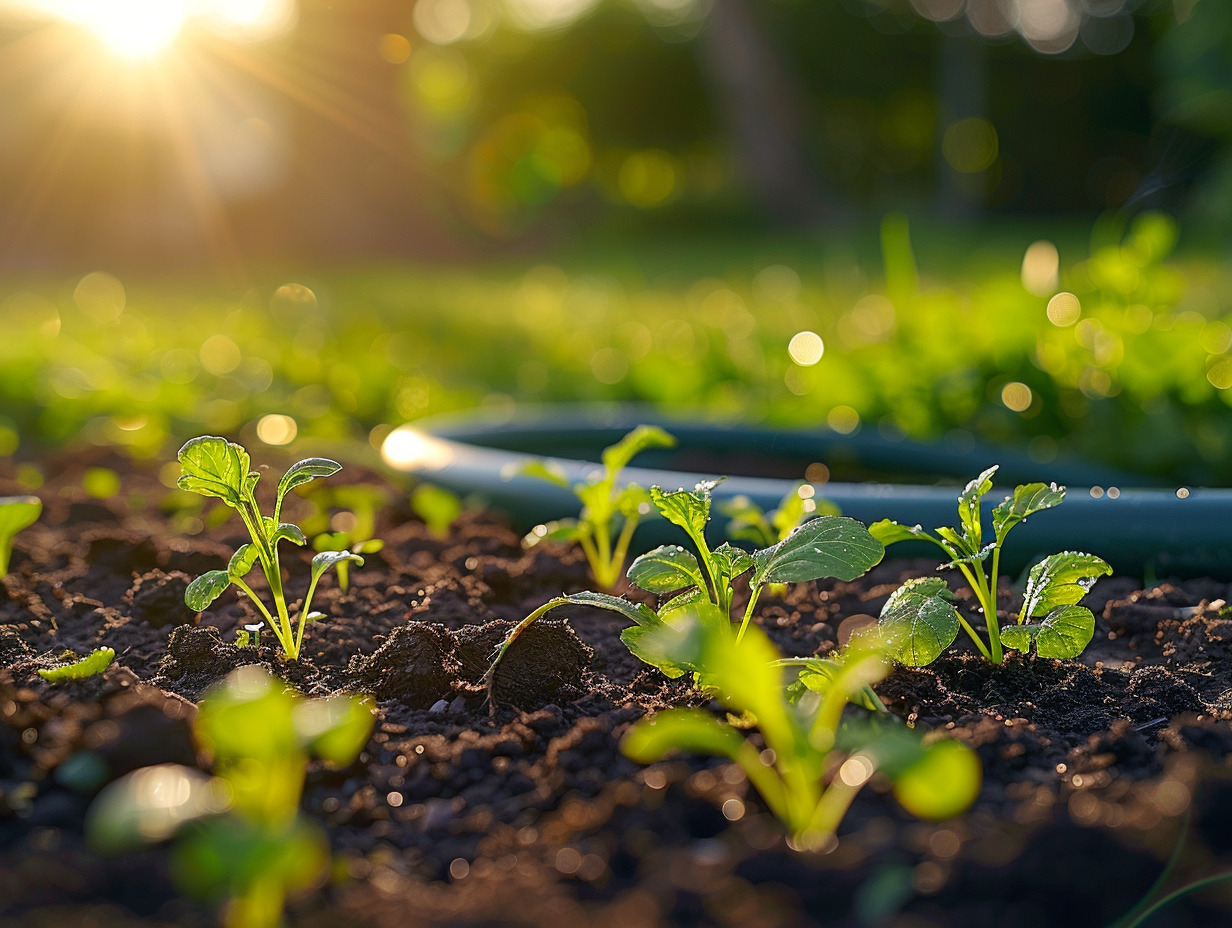
Practical Tips for Maintaining Newly Seeded Grass
Regularity in watering the grass is a cornerstone of germination. Ensure that the soil remains consistently moist without causing waterlogging. Use a fine and even spray, preferably in the morning or evening to reduce evaporation. This principle of regularity also applies to monitoring the growth of your grass to adjust care accordingly.
Monitor the growth and be patient before the first mowing. When the grass reaches the required height, about 8 cm, proceed with a light cut, ensuring not to remove more than one-third of the blade height. Make sure your mower blades are sharp to avoid damaging the delicate young shoots. This first mowing will encourage deeper rooting and better density.
Regarding soil care, it is advisable, after seeding and before germination, to roll the surface with a roller to ensure optimal contact between the seeds and the soil. This promotes uniform germination and a denser lawn. Be careful not to compact the soil too much; a light pass is sufficient. The lawn, a place for relaxation and recreation, deserves meticulous attention to reveal its full potential.